
Jocelyn Dunstan Escudero joins PLOS Global Public Health Editorial Board
Jocelyn Dunstan Escudero, academic at IMC UC in shared position with the Department of Computer Science UC, PhD in applied mathematics and theoretical physics, and researcher at the Millennium Institute of Mathematics and Computer Science UC. Millennium Institute Foundational Research on Data and the Millennium Institute in Engineering and Artificial Intelligence for Health(iHEALTH), was appointed to the editorial board of PLOS Global Public Health. This is an #OpenScience journal dedicated to public health research that broadens the range of global perspectives from which to learn in order to improve the health of all humanity.
As the journal, launched in 2021 and which has already published 1,000 pieces of research, points out, it aims to address "deep-seated global inequities in public health" and make high-impact research visible to "health professionals, policymakers and local communities without barriers." It also aims to amplify the "voices of underrepresented and historically excluded communities" and prioritize "equity, diversity, and inclusion at all levels (editors, editorial boards, peer reviewers, and authors) to broaden the range and diversity of perspectives at the forefront of public health and promote the health of all humanity."
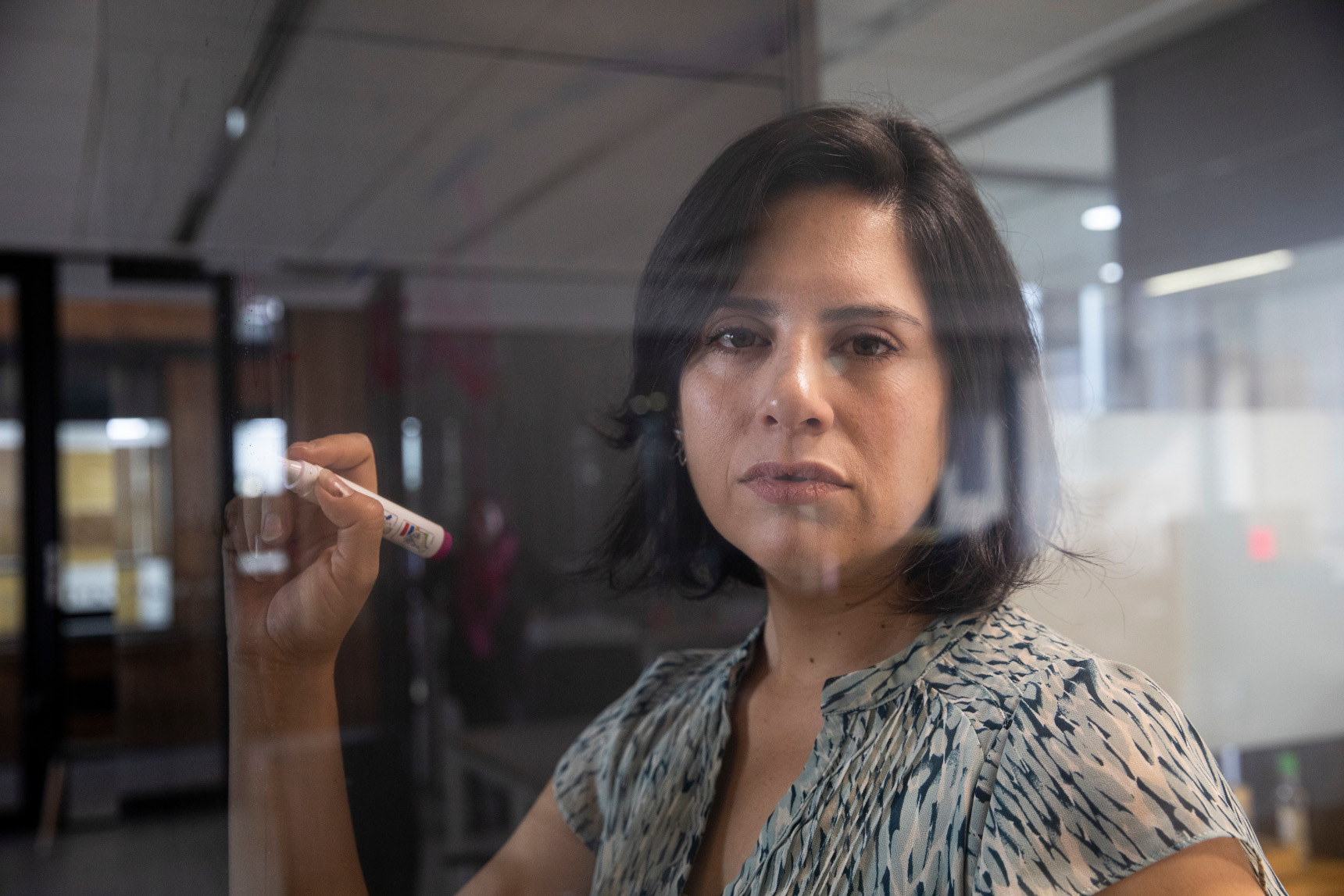
Jocelyn Dunstan.
For that reason, the aim of the journal is to present "ethically and methodologically rigorous research that has an impact on public health" and, in particular, to encourage papers that report on "research on health inequalities and efforts to increase diversity and inclusion in public health." Currently, the journal's editors-in-chief are Catherine Kyobutungi, PhD , director of the African Population and Health Research Centre(APHRC), and Madhukar Pai, a physician and epidemiologist at McGill University in Canada.
Currently, PLOS Global Public Health considers papers in areas including, among others, global health care delivery; infectious diseases; noncommunicable diseases; mental health; maternal, newborn, and child health; nutrition; sexual and reproductive health and rights; indigenous health; environmental and planetary health; social and behavioral health; and global health security.
Joining an inter-transdisciplinary evaluation group
The FONDECYT evaluation groups are made up of researchers with recognized experience and expertise in different scientific and technological areas. Their task is to support the evaluation and selection processes of the proposals in each competition and, in addition, to monitor and control the projects that are being executed.
Today there are 30 evaluation groups in four areas: Arts, Social Sciences and Humanities; Exact and Engineering Sciences; Natural and Life Sciences; and Inter and Transdisciplinary. Invitations to join these entities are proposed by the experts of each group and validated by ANID's Superior Councils of Science and Technological Development on the basis of excellence in research.
In the case of the inter-transdisciplinary group, the director is Mauricio González, PhD in biological sciences from the Institute of Nutrition and Food Technology of the University of Chile(INTA). It also has 15 members from various institutions of higher education, such as Universidad de Concepción, Universidad de Valparaíso, Universidad Técnica Federico Santa María and Universidad de la Frontera.