
Ricardo Baeza-Yates becomes Full Member of the Chilean Academy of Sciences
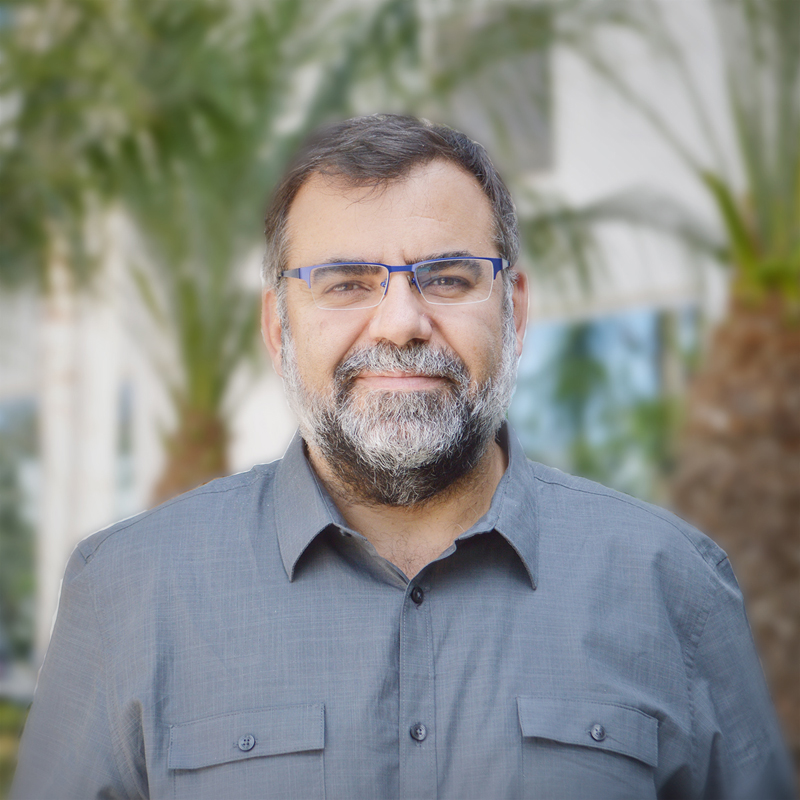
In merit of his outstanding scientific career, the academic of the DCC U. Chile and senior researcher of the Millennium Institute Foundational Research on Data, Ricardo Baeza-Yates was incorporated as a Full Member of the Chilean Academy of Sciences, an entity that groups the most outstanding scientists of the country. "It means being one of the 36 most outstanding Chilean scientists in the country according to the Academy, where one is proposed and elected by its members. It is influenced by the research trajectory, its impact, awards, active participation in different areas of society, etc.", said the academic.
This recognition makes him the first scientist in computer science to be incorporated as a Full Member. "I receive this news very happy, although it is something that could have happened before, since I have been a Corresponding Member for twenty years despite being one of the five most cited Chileans in Google Scholar. Surely the fact that I am not permanently in Chile and that I am not from one of the traditional sciences, delayed this recognition".
Ricardo Baeza-Yates holds a PhD in Computer Science from the University of Waterloo, Canada. He has an extensive and distinguished career in the field of computer science both in Chile and internationally. Currently, he is Research Director of the Institute for Experiential Artificial Intelligence at Northeastern University, in the United States, as well as part-time Full Professor in the Departments of Information and Communication Technologies at the Universitat Pompeu Fabra in Barcelona and Computer Science at the University of Chile, where he is also Senior Researcher at the Millennium Institute Foundational Research on Data (IMFD). Between 2006 and 2016, he was Vice President of Research at Yahoo! Labs, first from Barcelona and then in Sunnyvale, California; and between 2019 and 2023 he was a member of the Artificial Intelligence Advisory Board of the Spanish State. He is a Fellow of the IEEE and the Association for Computing Machinery (ACM), the world's largest scientific and educational computing society.
His research interests include algorithms and data structures, information retrieval, web search and data mining as well as data science and data visualization. He is also an expert in responsible AI, a subject in which he participates in different initiatives, committees and advisory boards around the world, such as the Global AI Ethics Consortium, the Global Partnership on AI, the fAIr LAC initiative of the IDB (Latin America and the Caribbean) and the US Technology Policy Committee of the ACM. He is also co-founder of OptIA in Chile, an NGO for the transparent and inclusive use of algorithms, and member of the editorial board of AI and Ethics Journal.
Throughout his career he has received multiple national and international awards for his contributions to computer science, including the Spanish national prize in computer science Ángela Ruiz Robles, awarded by the BBVA Foundation and the Spanish professional associations of computer science, SCIE, and "the Salvà i Campillo Award for Outstanding Personality for his contributions to the promotion of ICT, awarded in Catalonia, and the Latin American Merit Award in Computer Science, awarded by the Latin American Center for Computer Science Studies (CLEI). He is the author of numerous scientific publications and co-author of "Modern Information Retrieval", the most cited book on information retrieval.
Based on this trajectory, Ricardo Baeza-Yates gives his vision of computing today, stating that "in the last thirty years the discipline has matured a lot in the world and in Chile. Thirty-four years ago, when I returned from my doctorate, in Chile there were less than 20 PhDs in computing in about five universities. Today we have already passed a hundred PhDs in most universities, partly with the creation of local PhD programs, where the DCC U. Chile was the pioneer and where I graduated the first PhD in computer science, Gonzalo Navarro. The main challenge now is to strengthen first level research in computing, which is still concentrated in the main universities of the country".
-
Source: DCC Communications