Transactions on Graph Data and Knowledge: the new "Diamond OA" journal created by Aidan Hogan with an international team
April, 2024.- Transactions on Graph Data and Knowledge Transactions on Graph Data and Knowledge (TGDK) is a new journal that publishes peer-reviewed research on the use of graphs. the use of graphs to represent data and knowledge, as well as the techniques, theories, applications and results emerging in this environment.
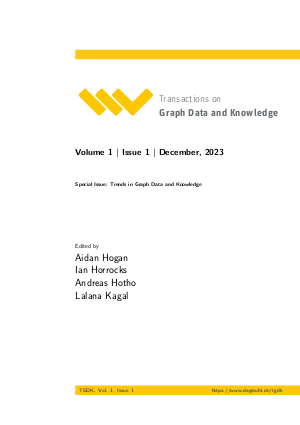
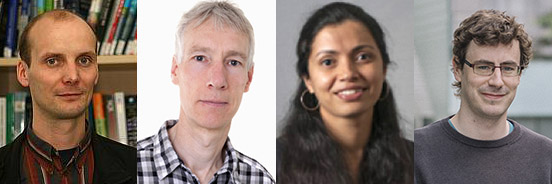
Created by Aidan Hogan, University of Chile; Ian Horrocks, University of Oxford, U.K.; Lalana Kagal, Massachusetts Institute of Technology, U.S. y Andreas Hotho, University of Würzburg, Germany; TGDK is a journal Diamond OAThis means that articles are published openly and free of charge, both for authors and readers.
This initiative arises as an alternative alternative that seeks to change the business of many journals and publishers that are currently charging an overdimensional overcharging for the publication of academic research.. "The gap in the service provided by publishers like Elsevier and the cost they impose is abysmal," explains Aidan HoganAidan Hogan, deputy director of the Department of Computer Science at the University of Chile, and IMFD researcher.and IMFD researcher. "The services are services are largely provided by academics who write, edit and review the articles on a voluntary basis.. The publishers obtain payments from subscriptions to read the articles or in the APCs (article processing charges) they charge to publish Open Access articles with them," he adds.
"Andreas, Ian and Lalana resigned from their positions as editors-in-chief of the. "Journal of Web Semantics from Elsevier Publishing, and in parallel, I wrote a blog post detailing the problems with Elsevier and similar publishers, for which I and similar publishers, for which I was invited by a committee of the SWSA committee to participate in defining this new journal, and to be one of its editors-in-chief," Hogan notes.
What is scientific publication?
The academic tradition of scientific publishers and journals is a long-standing one. For People working in science, the publication process is familiar: research is submitted to a journal (which may have more or less prestige), where it is evaluated, corrected and published. evaluated, corrected and published. This allows the work to be, in a way, validated by the international scientific communitycommunity, and that it can be available available to People working in the same area.
Until a few years ago, the associated costs were layout, printing and distribution.since, as Hogan explains reviews have always been conducted by peer researchers, peer reviewwho are not remunerated by the journals.. However, many publishers and journals are now charging fees that far exceed the costs of publication. far exceed the costs of publication, which is currentlyThe cost of publishing, which is currently mainly done on the web, so that printing and distribution costs are non-existent, and the cost of layout is much lower than before, since the researchers themselves can do it without problems.
Charging for access to knowledge
The team behind TGDK, y many other scientists, believe that publishers are taking advantage of the academic tradition, as well as the institutions that support it, to profit from the taxpayers of the countries that fund research.and the institutions that support it, to profit from the taxpayers of the countries that fund the research.
"We see that, with the web, there are ways to publish our research much more cheaply, and thus, help repair this situation.. Thinking of Chile, I can see how the exorbitant costs can exclude some countries or researchers may exclude some countries or researchers from participating in the system., deepening the inequality that exists in the participation in the development of research and in the access to its results."The researcher, who also highlights the importance of free and open access to knowledge, recalls "the story of Aaron Swartzwho tried to to redress this inequality, releasing the results of research funded by the People to funded by the People to humanity, and died at an early age as a consequence of his convictions".
The objective of TGDK is to be an exemplar of a new type of research journal, which maintains or exceeds the prestige and quality of international journals published by commercial publishers, but whichthat maintains or surpasses the prestige and quality of international journals published by commercial publishers, but without the associated high and unnecessary costs. without the associated high and unnecessary costs. "The academic tradition makes this process difficult, since in many institutions publications are valued by the editorial of the article, its inclusion in international indexes, and its 'impact factor' that measures how many citations the journal's articles receive, all elements that are controlled, in large part, by for-profit companies," Hogan points out. For the researcher, not participating in this system is almost incompatible with being an academic, It is therefore necessary to change this environment in order to promote scientific research without inequalities.
A necessary change
To promote the new magazine TGDKthe researchers created an international created a community of international experts, as editors and reviewers, who lend their reputation to the journal. The publishing house, Dagstuhl Publishing, offers low-cost services and, most importantly, fully shares the vision of the team behind the publication.
A first edition first edition with twelve selected articlesand in the medium term, the team is looking for the inclusion of TGDK in international indexes of greater relevance, so that it acquires a good impact factor. "We are implementing some innovations on review times, acknowledgements for anonymous reviewers, publication of resources beyond research, among others. There is still a lot of room for improvement in the current notion of an academic journal beyond its cost."Hogan emphasizes.
At the forefront of graphs
Transactions on Graph Data and Knowledge (TGDK) is a new open access journal that publishes research contributions on the use of graph-based abstractions to represent data and knowledge.
Networks enable a wide variety of techniques for integrating, querying, reasoning and learning from diverse data and knowledge on a large scale.. TGDK brings together knowledge from diverse research communities in computer science, graph databases, graph representation learning, graph theory, knowledge graphs, knowledge representation and semantic web.
In recent years, there has been a resurgence interest in the use of graphs to represent data and knowledge has resurged in recent years.. The topic is gaining traction in both industry and academia, and advances in other areas of computer science are also reflected in this field: for example, key developments in the area of deep learning have led to the emergence of powerful new techniques in the field of graph representation learning.
Data and graph knowledge can also play a role in other areas of can also play a role in other areas of computer science, leading to advances in data science, information retrieval, natural language processing, and other fields.The versatility of data and graph knowledge can also play a role in other areas of computing, leading to advances in data science, information retrieval, natural language processing, and other fields. Because of this versatility, more and more uses of data graphs continue to emerge, facilitating new discoveries in scientific disciplines, more transparency in governance, smarter applications for users, better data management in industries, and many other advances. TGDK aims to showcase state-of-the-art advances in this area and change the academic publishing environment.